
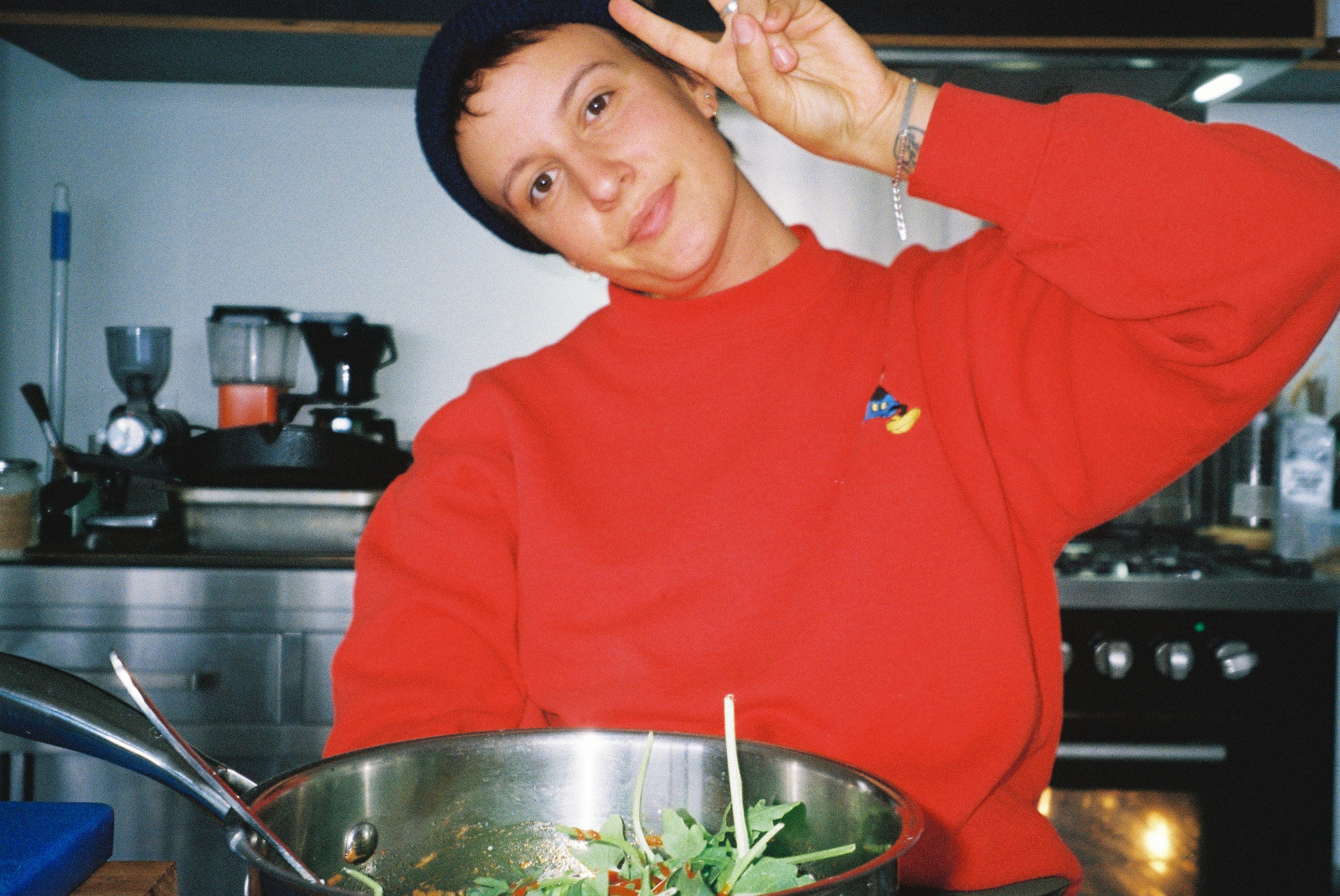
MAD alum and cook Harriet Tomlinson was at the top of her game in her dream job, managing front-of-house at the award-winning Melbourne restaurant Manzé. Then, almost from one day to next, she burnt out—and hard, prompting her to leave the city and embrace a slower lifestyle in the small coastal town of Kennett River. This month, Harriet shares how MAD Academy helped fix her “wobbly compass” and talks about finding a renewed sense of purpose as the caretaker of 180 acres of pristine Victorian farmland and forest.
How did you hear about Academy and what motivated you to come?
I was working with a chef in Melbourne, and he got the scholarship to go over and do the Leadership & Business course. He was a bit further along in his career than me, and I was just in complete awe, thinking it was the coolest thing ever. As soon as I saw the Environment & Sustainability program, I knew it was exactly where I wanted to go. At the time, I’d also just moved out of the city after I’d gone through a massive bout of burnout, which it seems like everybody in hospitality goes through at some point. So, it seemed like the perfect timing — I was in a new town with more time, space, and bandwidth for something new.
You’re definitely right about the high level of burnout in hospitality, can you tell us about your experience?
It was quite confronting because I’m a bit of a ‘stoic Sally’ — I don’t really cry ever and, with this, I was just a mess. I was in my dream job in my dream restaurant with the most amazing crew that you could ever ask for. But I was really struggling with the nights and feeling pretty disconnected. And then, one day I was driving to a friend’s engagement party and I just balled my eyes out the whole way there and all the way back to work for service that evening. And then when I got to work, I just broke down and said: ‘I can’t. I can’t do it anymore.’ It felt crazy because there wasn’t a catalyst within that workplace. I then moved down to the coast and took a job as a barista—going from the peak of my career right back down to being 15-year-old me. It was a huge moment of swallowing my pride for the sake of my mental health and my future.
At that point in your life, do you feel like attending Academy gave you some clarity or direction?
Definitely. I was immediately pumped full of inspiration—I remember madly writing down all these crazy ideas that I would’ve never thought possible, just because I’d only ever thought about the obstacles, like capital. But Academy gave me a real sense of possibility.
Just after the burnout, I kept saying I had a wobbly compass and had no direction. But the experience helped me see that whether I chose to be in the industry or not, as long as I stuck to my commitment to sustainability as a cook, I couldn’t go wrong. Even if I really fucked it up or made a bad decision. Afterwards, I felt like I could finally move forward without being afraid because all I had to do was lean on my ethical compass – a compass that was solidified by Academy.
You mentioned getting all these crazy ideas at Academy. Like what?
I remember hearing about Johanne (from Hegnsholt farm) talking about the emissions of transporting the eggs back to the city to sell. We’ve got chickens at the property, so I just went into hyperdrive wanting to build this chicken coop that harnesses energy from the chicken’s movements to power a vehicle to get our eggs back to town. That was a bit far-fetched, but I did implement some not-so-crazy stuff: like collecting milk waste from the local cafe and fermenting it with the chicken feed. It’s a good protein source and great for their gut health. I also started collecting the bread ends to supplement a third of their grain diet.
So, where’s the compass pointing for you now?
I’m the caretaker of a beautiful private property in Kennett River owned by a family that lives in the city. I tend to the farm, and animals, and run my own private dining events. I thought farming would be easier (laughs) but of course, you work from sun up to sun down. But being both a cook and farmer is great for someone like me who likes to stick their fingers in a lot of different pies and dabble in a lot of different areas. One day you might be doing admin for a massive function for 300 people, the next you’re in the shed taking apart a whole deer.
Ok, bonus question – what was it like breaking down a whole deer for the first time?
The deer here are pretty problematic for the ecosystem so there’s a local guy who culls them—he’s been living there his whole life. One day, he brought one to the shed, and we broke it down together into kind of manageable pieces. And then he just said: ‘Okay, good luck’, and just left me to it. I tried to use my memory of the cuts of meat from the kitchen, but I definitely cut through a couple of things that I really shouldn’t have. It sounds a bit hippy-dippy, but it felt like a very spiritual practice to be on this land and preparing this beautiful animal. One of the many, slower things I really cherish now.